


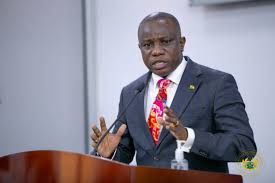

Former Defence Minister Dominic Nitiwul has raised concerns over the timing of the government’s decision to significantly expand recruitment into Ghana’s security services, questioning why the move was not implemented earlier if the capacity existed.
Mr. Nitiwul said while the opposition supports job creation initiatives, the decision to increase recruitment numbers raises critical questions about earlier limitations.
“In principle, we agree with what the president has done to double the numbers. For every other young person who gets a job, we are all for it,” he stated.
His comments follow a directive by President John Mahama on March 16, 2026, to expand recruitment into the security services from 20,000 to 40,000 personnel over a four-year period. The initiative is expected to enlist about 10,000 recruits annually through what government describes as a transparent and merit-based process.
The expanded recruitment will cover key agencies including the Ghana Police Service, Ghana Armed Forces, and the Ghana Immigration Service.
Despite backing the policy in principle, Mr. Nitiwul questioned why the government had previously limited recruitment figures, particularly when it now appears capable of doubling intake.
“If today they could recruit 20,000, why did they decide to recruit 10,000 at the beginning and use IMF as the excuse?” he asked.
He suggested the expansion appears to be an afterthought, though he maintained that any initiative that benefits young people should be supported.
“All the same, we welcome it. We think that it’s something that will benefit the youth and we are all for it,” he added, urging the government to consider further increases if resources permit.
The policy has been positioned as part of broader efforts to strengthen national security while addressing rising youth unemployment. However, it has also sparked debate over the financial and logistical capacity required to sustain the expanded intake.
Mr. Nitiwul cautioned that the initiative must be backed by adequate planning and funding to avoid placing undue strain on the system. He explained that recruitment into the security services is directly tied to budgetary allocations, particularly under the Ministry of the Interior, which oversees salaries, uniforms, equipment, and operational costs.
“That is factored into the money for pay and allowances which has to be reviewed by the Minister for Finance,” he noted.
He further highlighted potential accommodation challenges, warning that without sufficient barracks or housing arrangements, recruits may face difficulties after enlistment.
“We will not accept a situation where these young people are just called in, handpicked, and then suffer along the way because government did not prepare itself,” he cautioned.
While acknowledging the potential benefits of the expanded recruitment, Mr. Nitiwul stressed the importance of ensuring that all necessary resources and infrastructure are in place to support the policy effectively.