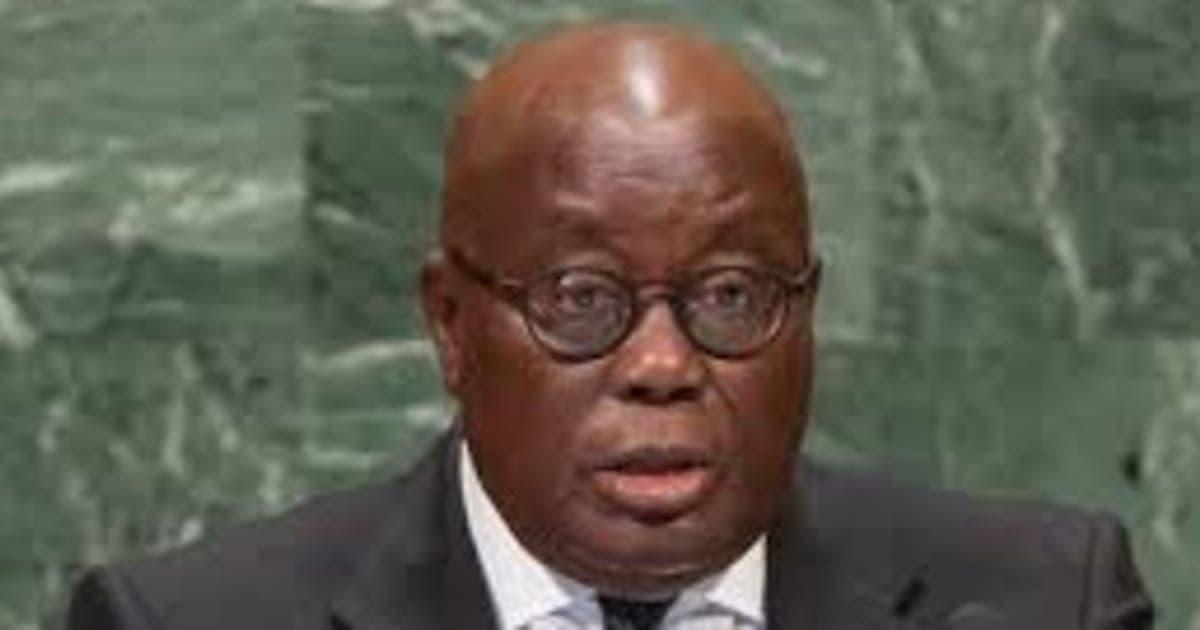





Former President Nana Addo Dankwa Akufo-Addo has received nationwide after a video of his resurfaced online following a landmark resolution by the United Nations General Assembly declaring the transatlantic slave trade a grave crime against humanity.
The resolution, passed on Wednesday, March 25, 2026, has reignited global discussions on reparatory justice, with many pointing to Akufo-Addo’s earlier advocacy as both timely and prescient.
The viral footage captures the former president addressing the Assembly during its 78th session in September 2023 at the UN Headquarters in New York. In his remarks, he made a strong case for reparations to countries affected by the transatlantic slave trade.
According to the video and prior reports, Akufo-Addo acknowledged that no financial compensation could fully account for the horrors endured by millions of Africans. However, he argued that reparations would serve as a moral acknowledgment of the grave injustices committed.
“No amount of money will ever make up for the horrors, but it would make the point that evil was perpetrated… that millions of productive Africans were snatched from the embrace of our continent and put to work in the Americas and the Caribbean without compensation for their labour,” he told the Assembly.
He further stressed that the legacy of the slave trade remains deeply embedded in the modern global economic structure, noting that the enterprise was state-sponsored and deliberate.
Akufo-Addo also drew historical parallels, pointing out that compensation was paid to slave owners at the time of abolition, while the victims themselves received nothing.
“If there are any hesitations… it is worth considering the fact that, when slavery was abolished, the slave owners were compensated for the loss of the slaves,” he stated.
The speech was delivered during the high-level debate of the 78th session of the UN General Assembly, which brought together world leaders and representatives from across the globe.
Following the recent UN resolution, the former president’s remarks have attracted widespread praise on social media and among policy observers, with many describing his stance as a bold and necessary intervention in the global reparations debate.
The renewed attention underscores growing momentum behind calls for reparatory justice, as international institutions and governments increasingly confront the enduring consequences of the transatlantic slave trade.