


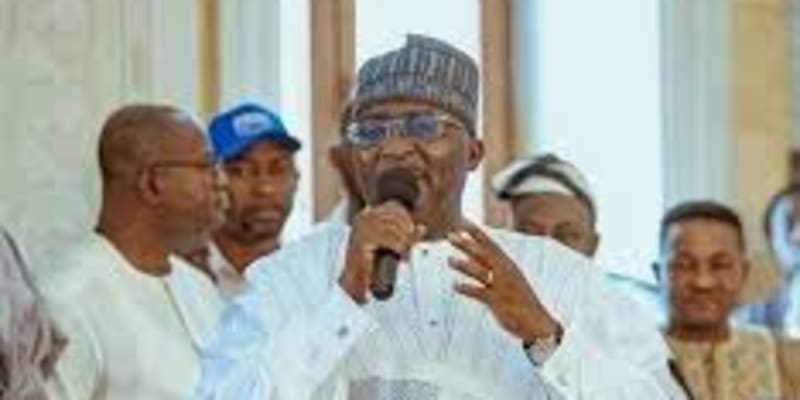

President John Dramani Mahama has attributed Ghana's persistent flooding challenges in part to the sale of land in waterways and wetlands by some traditional authorities, warning that the practice continues to undermine efforts to address the country's recurring flood disasters.
Speaking at a town hall meeting with members of the Ghanaian diaspora in the United Kingdom, the President expressed concern about the increasing encroachment on streams, wetlands and other protected water retention areas, describing the trend as a major contributor to flooding, particularly in urban centres such as Accra.
According to President Mahama, some chiefs have been allocating and selling plots of land located within streams and wetlands, resulting in the obstruction of natural drainage channels and reducing the capacity of the environment to absorb excess rainfall.
"Our traditional rulers are selling plots in streams," the President stated, explaining that when waterways are occupied by buildings and developments, floodwaters have nowhere to flow during heavy rains.
Drawing a comparison with the United Kingdom, Mahama said constructing buildings within waterways would be akin to erecting structures in London's canals and expecting water to find an alternative route.
"You cannot build in canals and expect the water to disappear. The same principle applies here. When we block natural waterways, the water eventually finds its way into people's homes," he noted.
The President also highlighted the growing encroachment on Ramsar sites—wetlands protected under international environmental agreements due to their ecological importance. He explained that these wetlands serve as natural flood buffers and provide habitats for migratory birds that travel to Ghana during winter months.
According to him, the continuous conversion of such protected areas into residential and commercial developments diminishes their ability to retain excess water, increasing the risk of flooding in surrounding communities.
However, Mahama stressed that responsibility for the problem does not rest solely with traditional leaders. He also criticised Metropolitan, Municipal and District Assemblies (MMDAs) for failing to enforce planning regulations and building controls.
The President noted that in some instances, permits have been granted for developments in waterways and flood-prone areas, further compounding the challenge.
He acknowledged that efforts to demolish illegal structures often attract public criticism, with governments accused of being insensitive or harsh.
"We also have local councils and assemblies that fail to enforce the rules. Sometimes permits are even issued for construction in waterways, and when government moves to demolish such structures, people accuse us of being cruel," he said.
Mahama's comments come as several parts of Accra and other communities across the Greater Accra Region continue to experience flooding following recent heavy rains.
His remarks also echo calls by urban planning experts and some traditional leaders, including the Ga Mantse, who have recently advocated stricter measures, including the prosecution of chiefs and individuals involved in the sale of lands situated in waterways and flood-prone zones.
The President reiterated the need for stronger enforcement of planning regulations, protection of wetlands and collective action by traditional authorities, local government institutions and citizens to prevent future flooding and safeguard lives and property.
With the rainy season intensifying, concerns continue to grow over the vulnerability of several communities, renewing calls for long-term solutions to Ghana's perennial flooding crisis.