


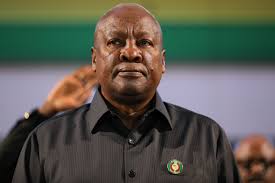

A major contradiction has emerged between President John Mahama’s repeated commitment to curb sole-sourced procurement and new data suggesting widespread use of the practice under his government’s flagship infrastructure programme.
During his first State of the Nation Address (SONA) on February 27, 2025, President Mahama pledged to prioritise infrastructure development to tackle Ghana’s backlog of poor roads, unveiling the “Big Push” programme as the vehicle to deliver on that promise. Central to the initiative was a commitment to reform procurement processes by minimising sole-sourcing in favour of competitive bidding to enhance transparency and value for money.
The President reiterated this stance days later at the National Economic Dialogue in Accra, warning that excessive reliance on sole-sourced contracts inflates costs and drains public finances.
“Single-source procurement must be the rare exception rather than the norm,” he emphasised.
The anti–sole sourcing message has remained consistent in the President’s public pronouncements, including the 2026 SONA, where he announced plans to introduce legislation to ban sole-sourced contracts except under exceptional circumstances.
The position also reflects long-standing policy commitments by the National Democratic Congress (NDC), which pledged in both its 2020 People’s Manifesto and 2024 Reset Agenda to make sole-sourcing the exception rather than the rule.
However, recent findings by The Fourth Estate raise serious concerns about the implementation of these commitments.
Data Reveals Heavy Reliance on Sole-Sourcing
According to data obtained through Right to Information (RTI) requests, the Ministry of Roads and Highways awarded 107 road contracts within a seven-month period.
Of these:
• 81 contracts, valued at over GHS73 billion, were awarded through sole-sourcing
• 26 contracts, worth approximately GHS8 billion, went through selective tendering
• None were awarded via competitive tendering
This means more than 90% of the total contract value under the Big Push programme has so far been awarded without open competitive bidding.
Further analysis indicates that about 76% of contracts awarded between September 2025 and January 2026 were sole-sourced—contradicting official claims.
The Minister for Roads and Highways, Kwame Governs Agbodza, has defended the procurement approach, stating that contracts were “predominantly” awarded through restrictive tendering to fast-track project implementation.
He explained that extensive feasibility studies and engineering assessments were conducted prior to awarding the contracts, and insisted that the process aligns with government policy and the NDC’s broader objectives of building local contractor capacity.
However, this position appears at odds with the data, as well as the Minister’s own past stance. While serving as Ranking Member on Parliament’s Roads and Transport Committee in 2021, Mr Agbodza strongly criticised sole-sourcing, arguing that it leads to inflated project costs and limits the government’s ability to deliver more roads.
Adding to the controversy, Majority Leader Mahama Ayariga recently declared in Parliament that “the era of the sole-sourced contract is dead,” a statement that critics say is inconsistent with current procurement trends under the Big Push programme.