


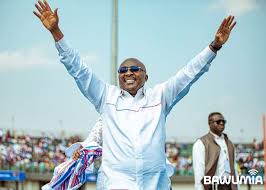
 upcoming presidential primaries.)
A growing body of data, opinion polls, and public commentary is reinforcing the narrative that Vice President Dr. Mahamudu Bawumia is the leading contender in the New Patriotic Party’s (NPP) upcoming presidential primaries.
Recent research findings and projections suggest that Dr. Bawumia holds a commanding advantage over his competitors, driven by strong party approval ratings, regional support, and endorsements from influential party figures.
According to research conducted by Global InfoAnalytics, Dr. Bawumia is projected to secure approximately 57 per cent of the total votes in the NPP presidential primaries. The same research indicates that within the NPP’s core voter base, the Vice President enjoys a 57 per cent approval rating, placing him comfortably ahead of the other aspirants.
Beyond the party’s internal dynamics, Dr. Bawumia is also reported to lead in general popularity among the wider electorate, with an approval rating of 48 per cent, compared to 25 per cent for Kennedy Agyapong, one of his closest rivals.
Regionally, projections suggest that Dr. Bawumia is poised to perform strongly across the country, with some forecasts predicting victories in as many as 10 regions, underscoring the breadth of his national appeal within the party.
In addition to empirical data, several opinion-based and spiritual projections have also tilted in Dr. Bawumia’s favour. Reports tracking 11 prophetic, spiritual, or analyst predictions indicate that eight foresee a victory for the Vice President in the primaries.
Among those making such claims are Prophet Bohyeba and Prophet Joshua Adjei, both of whom have publicly predicted a decisive win for Dr. Bawumia. While these forecasts are not scientific, they continue to shape public discourse and fuel grassroots enthusiasm among supporters.
As the NPP prepares for its presidential primaries, the convergence of polling data, internal approval ratings, and high-profile endorsements appears to have positioned Dr. Bawumia as the man to beat. However, with the final outcome resting in the hands of delegates, party observers note that the contest remains open until ballots are cast.