


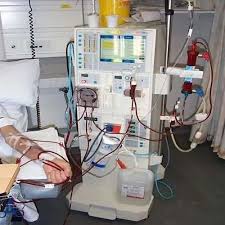
 in Ghana, revealing that about 13 per cent of the adult population, an estimated four million people, are currently living with the condition, many without being aware.)
Health experts have raised concerns over the growing burden of Chronic Kidney Disease (CKD) in Ghana, revealing that about 13 per cent of the adult population, an estimated four million people, are currently living with the condition, many without being aware.
Dr Mensah Amoah, a Physician Specialist and Nephrology Fellow, disclosed in an interview with the Ghana News Agency that the disease was fast becoming a major public health concern, largely because most cases in Ghana were detected only when the kidneys had already suffered significant damage.
According to him, unlike in many developed countries where early diagnosis is common, a large number of patients in Ghana seek medical care only when the disease has reached its final stage.
“Most patients present at Stage Five, which is kidney failure. At that point, the kidneys have completely failed and the only available treatment options are dialysis or kidney transplant, both of which are extremely expensive and inaccessible to many Ghanaians,” Dr Amoah explained.
He added that an increasing number of patients affected by the disease fall within the 20 to 50 age bracket—the most economically productive segment of the population.
Dr Amoah described chronic kidney disease as a “silent disease” because it often presents little or no symptoms in its early stages.
“As a result, many people assume they are healthy until the disease has progressed to an advanced stage,” he noted.
However, he emphasised that the condition could be slowed or prevented from worsening if detected early.
“When kidney disease is identified early, relatively simple and affordable medications used to control blood pressure and diabetes can significantly delay or even stop its progression,” he said.
The specialist urged the public to undergo routine medical screening, including urinalysis and kidney function tests at least once every year.
He explained that a simple urine test could reveal early warning signs such as the presence of protein or blood in the urine, both possible indicators of kidney damage.
“If these abnormalities persist after repeated testing, it signals that the kidneys may be in trouble and further investigations can be carried out,” he said.
Dr Amoah added that urinalysis services were widely available at health facilities across the country and were covered under the National Health Insurance Scheme (NHIS), making it an accessible first step for early detection.
Individuals living with hypertension, diabetes, HIV, hepatitis B, kidney stones or cancer were identified as being at a higher risk of developing chronic kidney disease.
Dr Amoah advised people within these groups to monitor their kidney health more frequently.
He also emphasised the role of lifestyle in preventing the disease.
“Reducing salt intake, eating balanced diets rich in vegetables, maintaining a healthy weight and engaging in regular physical activity are key preventive measures,” he stated.
He warned that foods such as canned products, salted fish, corned beef and sausages contained high levels of salt, which could raise blood pressure—one of the leading causes of kidney disease.
The physician recommended regular physical activity such as brisk walking, jogging or gym workouts for between 30 and 60 minutes at least three to five times a week to reduce the risk of hypertension and diabetes.
He also cautioned against the excessive use of certain painkillers and unregulated herbal medicines.
According to him, the frequent use of some pain medications can gradually reduce blood flow to the kidneys and cause long-term damage.
Similarly, he warned that some herbal remedies often considered harmless could contain substances toxic to the kidneys.
Dr Amoah recounted the case of a 21-year-old woman who developed severe kidney disease after years of taking herbal preparations to treat menstrual problems.
“When she reported to the hospital, she had already developed high blood pressure and stage four kidney disease. After she stopped the herbal medicine and received treatment, her condition improved to stage three,” he said.
While acknowledging that maintaining healthy diets could be challenging for many households due to the cost and availability of healthier foods, Dr Amoah encouraged the public to prioritise better nutrition where possible.
He recommended the consumption of whole fruits instead of processed fruit juices, which often contain high levels of sugar and little dietary fibre.
Dr Amoah concluded by urging Ghanaians to take preventive health checks seriously, stressing that early detection remained the most effective way to reduce the growing burden of chronic kidney disease in the country.