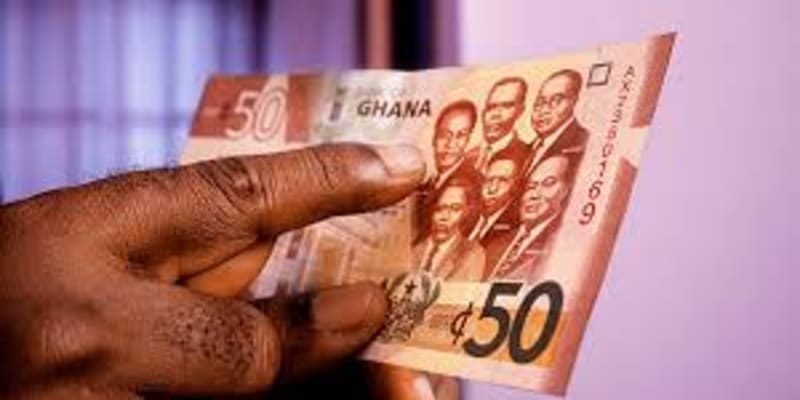
The Ghanaian cedi has posted recent gains against the US dollar, a trend attributed to the United States’ ongoing tariff war with several global economies, according to economist and senior lecturer at the Ghana Communication Technology University College (GCTU), Dr. Thomas Appiah.
Speaking in an interview with Connect FM, a subsidiary of Media General, on May 5, Dr. Appiah explained that the weakening of the US dollar on the international market is driving the cedi’s rebound. “The US dollar is devaluing on the international market… certainly resulting from some unfavorable policies Donald Trump is effecting. The tariff war is affecting the dollar,” he said.
As of May 5, 2025, the US dollar was trading at GH¢13.89, marking a 2.46% drop from its end-of-April value, according to data from the Bank of Ghana.
Dr. Appiah believes that if the trade tensions continue, the US dollar may weaken further, which could allow the Ghanaian cedi to sustain its recovery. He further credited Ghana’s growing gross international reserves — now estimated at $9 billion — and prudent fiscal policies for helping stabilize the local currency.
“Our gross international reserve is about $9 billion, and that could be used to shore up the cedi. Again, the policies implemented by the government are boosting investor confidence in the Ghanaian economy. This is very typical when there is a new political administration in place,” he noted.
The economist also pointed to a steady decline in fuel prices as an immediate benefit of the cedi’s appreciation. “The steady drop in fuel prices is indicative of the gains the cedi has made against the global trading currency. But petroleum product prices have also fallen internationally, which is another reason for the reduction at the pumps,” he explained.
Dr. Appiah expressed optimism that fuel prices would continue to fall in the coming months, further easing the cost burden on consumers.
However, despite the improved performance of the cedi, prices of general goods on the market remain largely unchanged. Dr. Appiah clarified that this is not unusual, emphasizing that price adjustments typically lag behind currency movements due to the influence of other economic factors.
“Prices may remain unchanged for a couple of months, as there are a multitude of factors that influence the prices of commodities,” he stated.
He concluded with cautious optimism, saying, “We are hoping this trend continues, as it would benefit us all.”