


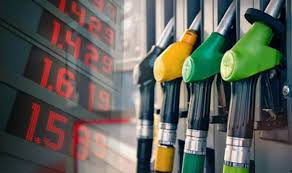
 has announced new minimum price floors for petroleum products, signalling a likely increase in fuel prices at the pumps from April 1, 2026.)
The National Petroleum Authority (NPA) has announced new minimum price floors for petroleum products, signalling a likely increase in fuel prices at the pumps from April 1, 2026.
Under the revised pricing window, petrol has risen from GH¢11.57 to GH¢13.30 per litre, marking an increase of GH¢1.73. Diesel recorded the sharpest hike, jumping from GH¢14.35 per litre to GH¢17.10—an increment of GH¢2.75 within the last two weeks.
Liquefied Petroleum Gas (LPG) has also seen a marginal adjustment, moving from GH¢10.67 to GH¢10.71 per kilogramme.
In a directive issued to Oil Marketing Companies (OMCs) and LPG Marketing Companies (LPGMCs), the NPA emphasised strict compliance with the new price floors in line with the Petroleum Products Pricing Guidelines (PPPG).
“As per the PPPG, all Oil Marketing Companies (OMCs) and LPG Marketing Companies (LPGMCs) are entreated to comply with the above price floors for the window under consideration,” the Authority stated in a notice sighted by Joy Business.
The regulator clarified that the announced prices exclude additional cost components such as premiums charged by International Oil Trading Companies (IOTCs), as well as margins for Bulk Import, Distribution and Export Companies (BIDECs), and those of marketers and dealers. These elements, it noted, would be determined independently by the respective industry players.
The directive means that no OMC or LPGMC will be permitted to sell fuel below the approved price floors between April 1 and April 15, 2026. Companies currently pricing below these thresholds are expected to adjust upward in compliance with the new guidelines.
Consequently, petrol cannot be sold for less than GH¢13.30 per litre, while diesel has a minimum selling price of GH¢17.10 per litre. With additional levies and operational margins factored in, consumers are likely to face significantly higher prices at fuel pumps nationwide.
The policy has, however, drawn criticism from some industry stakeholders. The Chamber of Oil Marketing Companies (COMAC) has questioned the relevance of the price floor mechanism despite its formulation in consultation with industry players.
Similarly, Duncan Amoah, Executive Secretary of the Chamber of Petroleum Consumers (COPEC), has argued that market competition among OMCs should be sufficient to determine pricing without regulatory price floors.
According to him, a competitive market environment could drive more efficient pricing structures, rendering the current system unnecessary.
Despite the concerns, the NPA maintains that the pricing framework is essential for ensuring stability within the downstream petroleum sector.
With the new price floor taking effect from Wednesday, April 1, motorists and households across Ghana should brace for a notable increase in fuel costs in the coming days.